Clarity. Focus. Results.
Most organisations can tell you what they spent. Far fewer can tell you what it changed.
Clarus Praxis helps COOs and transformation leaders get clear on what must actually change on the ground, then point the plans, programmes and effort they already have at achieving it.

The Challenge
Sound familiar?
Your strategy is clear. Your people are capable. Your governance is active and your dashboards are green.
And yet the gap between what your organisation intends and what it actually changes in the world remains frustratingly wide.
The work is organised around activity: initiatives, projects, outputs. Around everything except a clear, shared answer to what should actually be different on the ground when it's done.
When that answer is missing, effort expands, priorities multiply and governance thickens. And a harder question goes unanswered: of everything you're spending in time, budget and attention, which part is actually moving something, and which part is simply occurring?
Working harder inside a system pointed at the wrong thing is not the answer. Working with greater clarity about what must actually change is.
Not sure where the gap is largest in your organisation? Take the five minute assessment
What Becomes Possible
You can tell what’s working
When the condition is defined, every programme and investment can be held against it. The work that is contributing becomes visible. So does the work that never had a credible path to it.
You can stop things and defend the decision
Most organisations struggle to end work, because ending it looks like admitting waste. When the condition is explicit, stopping becomes a reasoned decision with evidence behind it rather than a judgement on the people doing the work.
Decisions accelerate
When the condition is clear, every team can evaluate their own proposals against it. Escalation drops. Meetings shorten. Leaders stop being the decision making bottleneck.
Silos weaken
Not through restructuring but through shared aim. When every function can see the condition they exist to change, collaboration becomes purposeful rather than procedural.
Measurement simplifies
Fewer indicators. Better insight. Reporting exists to show whether the condition is moving, not to demonstrate that activity is occurring.
The Approach
Outcomes Enablement
Not another framework. A discipline that makes your existing ones work.
Every framework you use assumes you already know exactly what you're trying to change. OKRs, scorecards, Lean, project governance and change plans are capable instruments, but none of them can tell you whether they're pointed at the right thing.
Outcomes Enablement answers that question first, precisely enough to organise around. Then the tools you already have start doing what they were built to do.
If you run operations, decisions stop escalating to you. When the destination is explicit, the people closest to the work can judge for themselves whether an action moves toward it.
If you run Lean or operational excellence, your improvements start compounding toward one change instead of many.
If you lead a transformation or programme, your governance gains the filter it's missing. Does this deliverable move the change? If not, you can stop it and defend the decision.
If you manage change or projects, your plan, whether Prosci or your own, is pointed at the change that matters, so adoption actually means something.
If you own strategy or performance, OKRs and scorecards start showing whether anything is moving, not just whether activity happened.
If you sit on the executive or board, oversight shifts from supervising activity to stewarding change.
Grounded in organisational psychology and twenty years in transformation roles. You work directly with Zakk. Starting prices are published, and the fee is fixed before work begins. The full thinking is in the book.
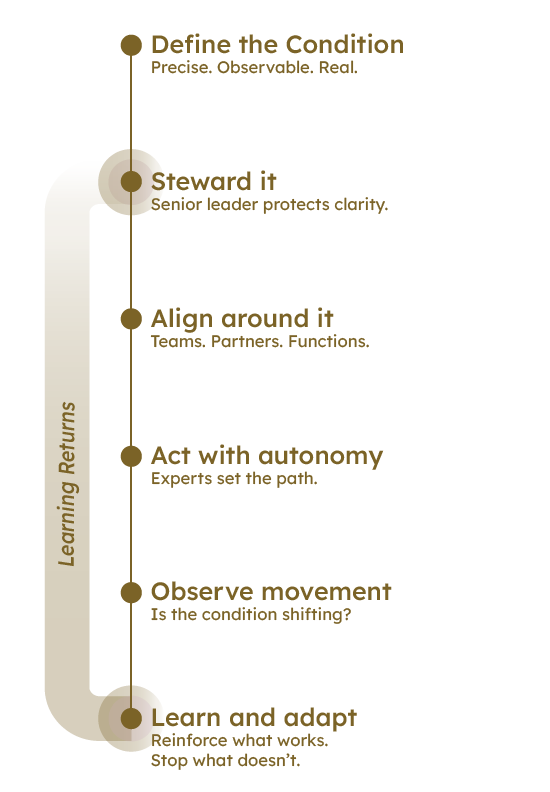
The difference in one picture. What must change, which the book calls the condition, moves from the hoped-for end of the chain to the centre of the work.
Five ways to work together
Get clear on what must change · Get everyone pulling in the same direction · Know whether it's working · Unstick a stalled programme · Workshops and speaking
Starting something new? Start with clarity. Already stuck? Start with the reset.
The conversation itself is usually clarifying
Most senior leaders who get in touch already know something isn't working. They just haven't had the space to examine it precisely. That's what the first conversation is for.
Bring your situation. If there's a fit, we'll both know it. If not, you'll leave with a clearer view of the problem you're carrying, which is worth the time either way.
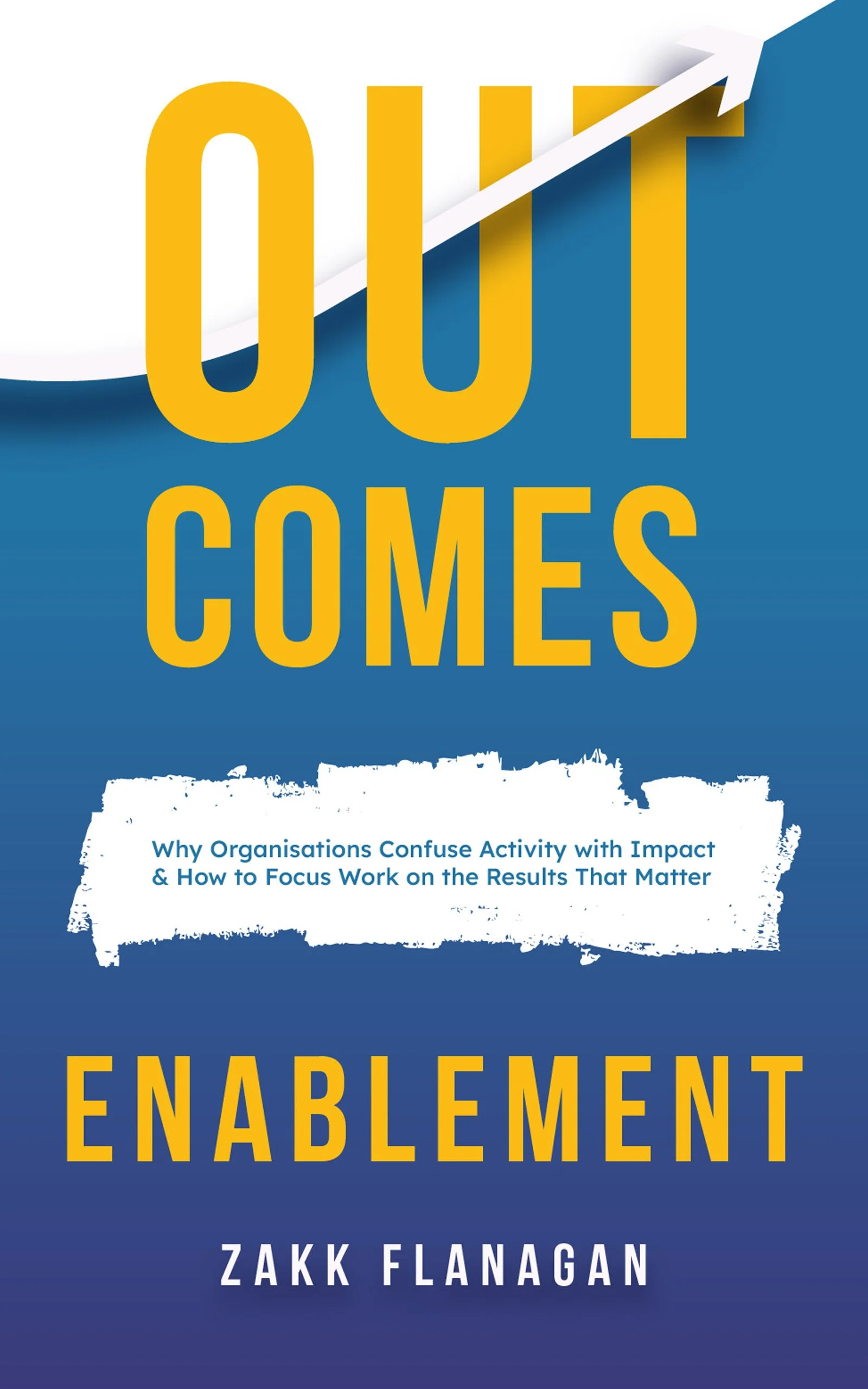
Outcomes Enablement: Why Organisations Confuse Activity with Impact & How to Focus Work on the Results That Matter is the full argument behind the practice — twenty chapters that name precisely why capable organisations consistently fall short of the change they exist to create, and what the discipline of Outcomes Enablement does about it.
Drawing on twenty years in transformation, change and strategy roles in Canada and the UK, it names a problem most capable leaders will recognise immediately, and sets out what to do about it.
Available now in paperback and digital editions.
The Book That Names the Discipline